
by David Furlanich | Sep 3, 2026 | Frequently Asked Questions in Media
Film production, video production, augmented reality (AR), and virtual reality (VR) are changing how businesses, brands, organizations, and audiences tell and experience stories. But with so many technologies, formats, cameras, software platforms, and production options available, knowing where to start can be difficult.
At Winged Whale Media, we believe great media begins with a clear understanding of the goal—not simply choosing the newest technology.
Whether you’re planning a corporate video, commercial, documentary, immersive experience, 360° video, AR campaign, VR experience, or virtual production project, this guide answers some of the most frequently asked questions.
16. How is VR filmmaking different from traditional filmmaking?
Traditional filmmaking gives the director significant control over what appears inside the frame.
VR and 360° production can change that relationship.
The audience may be able to look in multiple directions, meaning production teams need to think about:
• Camera placement
• Lighting
• Blocking
• Spatial audio
• Viewer attention
• Environment design
• Hidden crew and equipment
• Stitching
• Interactive elements
In immersive storytelling, the audience can have much greater freedom to explore the environment.
17. What is virtual production?
Virtual production combines physical filmmaking with digital environments and real-time technologies.
One example is LED-volume filmmaking, where actors perform in front of large LED displays showing digital environments.
Virtual production can allow filmmakers to see digital environments while filming rather than waiting until post-production to see the final composite.
18. Is virtual production the same as VR?
No.
They are related but serve different purposes.
Virtual reality is primarily an experience for the audience.
Virtual production is primarily a method of creating film, television, advertising, and other visual content.
Virtual production can use technologies associated with game engines, real-time rendering, tracking, LED displays, and digital environments.
19. What is immersive storytelling?
Immersive storytelling is storytelling designed to make the audience feel more directly present within an environment or narrative.
It can involve:
• VR
• AR
• 360° video
• Spatial audio
• Volumetric video
• Interactive environments
• Mixed reality
• Virtual production
Immersive media is increasingly expanding beyond traditional film formats into interactive and spatial experiences.
20. What is volumetric video?
Volumetric video captures people, objects, or environments as three-dimensional data.
Instead of simply recording a flat image, volumetric techniques can create a representation that can potentially be viewed from different perspectives.
This can be particularly interesting for immersive storytelling, virtual experiences, digital characters, education, and interactive applications.
Production Technology FAQs
21. Can AR and VR be used for business?
Absolutely.
AR and VR can be used for more than entertainment.
Potential applications include:
• Employee training
• Product demonstrations
• Education
• Real estate
• Tourism
• Architecture
• Retail
• Marketing
• Events
• Museums
• Corporate communications
• Interactive experiences
The important question isn’t simply “Can we use VR?”
It is:
“Will an immersive experience help us achieve our objective better than traditional media?”
22. Is AR/VR expensive?
It can be—but the answer depends heavily on the type of experience.
A simple interactive AR experience can have very different requirements from a custom VR environment involving 3D modelling, animation, spatial audio, programming, and multiple devices.
Costs can depend on:
• Creative complexity
• 3D assets
• Software development
• Filming
• Animation
• Interaction design
• Hardware
• Testing
• Deployment
• Content updates
The smartest approach is to establish the desired user experience first and then determine the appropriate technology.
23. Can AI be used in film and media production?
Yes.
AI is increasingly being explored across multiple stages of production, including development, pre-production, visualization, editing, post-production, sound, and localization.
Potential applications include:
• Concept development
• Script assistance
• Storyboarding
• Production planning
• Transcription
• Video organization
• Editing assistance
• Visual effects workflows
• Captioning
• Translation
• Content personalization
However, AI should be treated as a production tool rather than a replacement for creative direction, storytelling, human judgment, and responsible production practices.
24. Can traditional film and AR/VR be combined?
Yes—and this is one of the most exciting possibilities.
A project could combine:
Traditional video + AR + 3D animation + 360° content + interactive experiences
For example, a company could create a traditional promotional film and then provide viewers with an AR experience that lets them interact with a 3D product.
This creates multiple ways for audiences to engage with the same story.
25. What is spatial storytelling?
Spatial storytelling considers not only what the audience sees, but also where the audience is within the story.
This becomes especially important in VR, 360° video, spatial computing, and immersive environments.
Instead of asking only:
“What should the camera show?”
Creators may also need to ask:
“Where should the audience be?”
“What should they notice?”
“What happens around them?”
“How should sound guide their attention?”
This represents a major shift from traditional frame-based storytelling toward audience-centered experiences.
Choosing the Right Production Approach
26. Should my business create a traditional video, AR experience, or VR experience?
Start with the business objective, not the technology.
Ask:
1. Who is the audience?
2. What do we want them to understand?
3. What do we want them to feel?
4. What action should they take?
5. Where will they experience the content?
6. Do they have access to the required technology?
If a traditional video communicates the message effectively, you may not need VR.
If immersion, interaction, or spatial experience provides a meaningful advantage, AR or VR may be worth exploring.
27. What should I prepare before contacting a production company?
You don’t need to have everything figured out.
It helps to know:
• Your objective
• Your target audience
• The type of content you want
• Your preferred deadline
• Where the content will be used
• Any existing brand guidelines
• Your approximate budget, if known
• Examples of content you like
A professional production team can help turn an initial idea into a production plan.
28. Can a production company help develop the idea?
Yes.
Many projects begin with nothing more than an idea or business objective.
The creative development process can help determine:
Concept → Story → Format → Production → Distribution
This is especially valuable for AR, VR, and immersive projects because the technology should serve the experience rather than becoming the experience itself.
29. What is the most important part of a media production?
The story and the audience experience.
Technology continues to evolve rapidly. Cameras become more capable, editing tools become more sophisticated, and immersive technologies continue to expand.
But audiences still respond to stories that communicate something meaningful.
Great production combines:
Storytelling + Creativity + Technology + Strategy
30. What does the future of film, AR and VR look like?
The boundaries between traditional film, virtual production, interactive media, AR, VR, and spatial computing are becoming increasingly interconnected.
Virtual production is becoming a more established part of modern production workflows, while immersive formats are creating new approaches to storytelling and audience engagement.
The future isn’t necessarily about replacing traditional filmmaking.
It is about giving creators more ways to tell stories and audiences more ways to experience them.
Why Choose Winged Whale Media?
At Winged Whale Media, we believe media production should begin with your story, audience, and objective.
Whether you’re looking for traditional video production, cinematic content, immersive experiences, AR, VR, 360° media, or emerging production technologies, the right solution starts with understanding what you are trying to achieve.
Have an idea for a film, video, AR or VR experience?
Let’s turn the idea into an experience your audience can see, hear, explore, and remember.
Winged Whale Media
Film Production | Video Production | AR | VR | Immersive Media | Creative Technology
Your story. Your audience. A bigger world.
by David Furlanich | Sep 3, 2026 | Frequently Asked Questions in Media
Film production, video production, augmented reality (AR), and virtual reality (VR) are changing how businesses, brands, organizations, and audiences tell and experience stories. But with so many technologies, formats, cameras, software platforms, and production options available, knowing where to start can be difficult.
At Winged Whale Media, we believe great media begins with a clear understanding of the goal—not simply choosing the newest technology.
Whether you’re planning a corporate video, commercial, documentary, immersive experience, 360° video, AR campaign, VR experience, or virtual production project, this guide answers some of the most frequently asked questions.
Film & Video Production FAQs
1. What is film production?
Film production is the process of developing, planning, recording, editing, and delivering a film or video project.
A typical production is divided into three major stages:
Pre-production → Production → Post-production
Pre-production includes concept development, scripting, storyboarding, scheduling, location planning, casting, and other preparation. Production is where the footage is captured. Post-production includes editing, sound, colour correction, visual effects, graphics, and final delivery.
2. What is the difference between video production and film production?
The underlying process is similar, but the goals and formats can differ.
Film production often refers to narrative films, documentaries, television, and cinematic projects, while video production can include corporate videos, commercials, social media content, training videos, events, interviews, promotional content, and other forms of digital media.
The right production approach depends on the audience, message, platform, budget, and desired result.
3. How much does video production cost?
There is no single price for video production.
The cost can depend on:
• Project length
• Number of filming days
• Locations
• Crew size
• Cameras and equipment
• Actors or presenters
• Lighting and sound
• Animation and visual effects
• Motion graphics
• Drone or specialized footage
• Editing requirements
• Music and licensing
• Distribution requirements
A simple interview video may require considerably fewer resources than a commercial involving multiple locations, actors, visual effects, and extensive post-production.
The best approach is to define the creative objective first and build the production around it.
4. How long does a video production take?
Timelines vary significantly.
A simple video may be completed in a matter of days or weeks, while larger productions can take several months.
A typical workflow includes:
Creative development → Pre-production → Filming → Editing → Review → Final delivery
Planning early can reduce delays and prevent expensive changes later in the production process.
5. Why is pre-production so important?
Pre-production is where a project is planned before cameras begin rolling.
It can include:
• Creative development
• Scriptwriting
• Storyboarding
• Shot lists
• Scheduling
• Location scouting
• Casting
• Crew planning
• Equipment planning
• Production design
• Budgeting
Good pre-production helps everyone understand what needs to happen before production begins.
In other words: better planning generally leads to a smoother production.
6. Do I need a script for my video?
Not always.
A scripted commercial or narrative film usually requires a detailed script. An interview-based corporate video may instead use interview questions, talking points, and a structured outline.
The important thing is to have a clear story and objective.
7. Do you provide video editing?
Professional post-production can include:
• Video editing
• Colour correction
• Colour grading
• Sound editing
• Music
• Voice-over
• Motion graphics
• Titles
• Animation
• Visual effects
• Subtitles and captions
• Social media versions
Editing isn’t simply about putting clips together. It is where the production becomes a coherent story.
8. Can you edit footage that was filmed somewhere else?
Yes, depending on the footage and project requirements.
Existing footage can potentially be transformed through editing, colour work, sound design, graphics, animation, and other post-production techniques.
If you already have footage, the first step is determining what material is available and what final result you want.
9. What equipment is needed for professional video production?
Equipment depends on the project.
A production may require:
• Professional cameras
• Lenses
• Lighting
• Audio equipment
• Tripods and stabilization
• Monitoring equipment
• Recording equipment
• Specialized cameras
• Editing workstations
However, equipment alone doesn’t create a great production.
Storytelling, lighting, composition, sound, direction, editing, and production planning are equally important.
10. What makes a video effective?
A strong video usually has three things:
A clear message.
A defined audience.
A compelling story.
High-end visuals can attract attention, but the content still needs to communicate something meaningful.
The best production technology is the technology that supports the story.
AR & VR FAQs
11. What is augmented reality (AR)?
Augmented reality adds digital information or objects to the user’s view of the physical world.
Depending on the application, AR can add:
• 3D objects
• Information
• Animation
• Navigation
• Interactive graphics
• Digital characters
• Product visualizations
Unlike VR, AR does not necessarily replace the real environment.
12. What is virtual reality (VR)?
Virtual reality places the user inside a digitally created or captured environment.
VR can be used for:
• Immersive storytelling
• Training
• Education
• Tourism
• Entertainment
• Simulations
• Brand experiences
• Virtual environments
• 360° experiences
VR fundamentally changes the relationship between the audience and the story because viewers can experience a scene from within an environment rather than simply watching a traditional rectangular frame.
13. What is the difference between AR and VR?
The simplest distinction is:
AR adds digital content to the real world.
VR places the user inside a digital or captured environment.
For example, an AR experience might allow someone to see a 3D product appear in their physical space.
A VR experience could transport that person into a completely different environment.
14. What is 360° video?
360° video captures a spherical view around the camera.
Instead of controlling exactly what the viewer sees, the viewer can look around the environment.
360° video can be viewed through compatible browsers and devices, while a VR headset can provide a more immersive experience.
15. Do I need a VR headset to watch 360° video?
No.
Many 360° videos can be viewed through compatible computers and mobile devices.
A VR headset can provide a more immersive experience, but it isn’t necessarily required.
This makes 360° content useful when you want to create immersive media while still reaching audiences who don’t own a headset.
Why Choose Winged Whale Media?
At Winged Whale Media, we believe media production should begin with your story, audience, and objective.
Whether you’re looking for traditional video production, cinematic content, immersive experiences, AR, VR, 360° media, or emerging production technologies, the right solution starts with understanding what you are trying to achieve.
Have an idea for a film, video, AR or VR experience?
Let’s turn the idea into an experience your audience can see, hear, explore, and remember.
Winged Whale Media
Film Production | Video Production | AR | VR | Immersive Media | Creative Technology
Your story. Your audience. A bigger world.
by Jacob Billings | Jun 14, 2021 | Virtual Reality
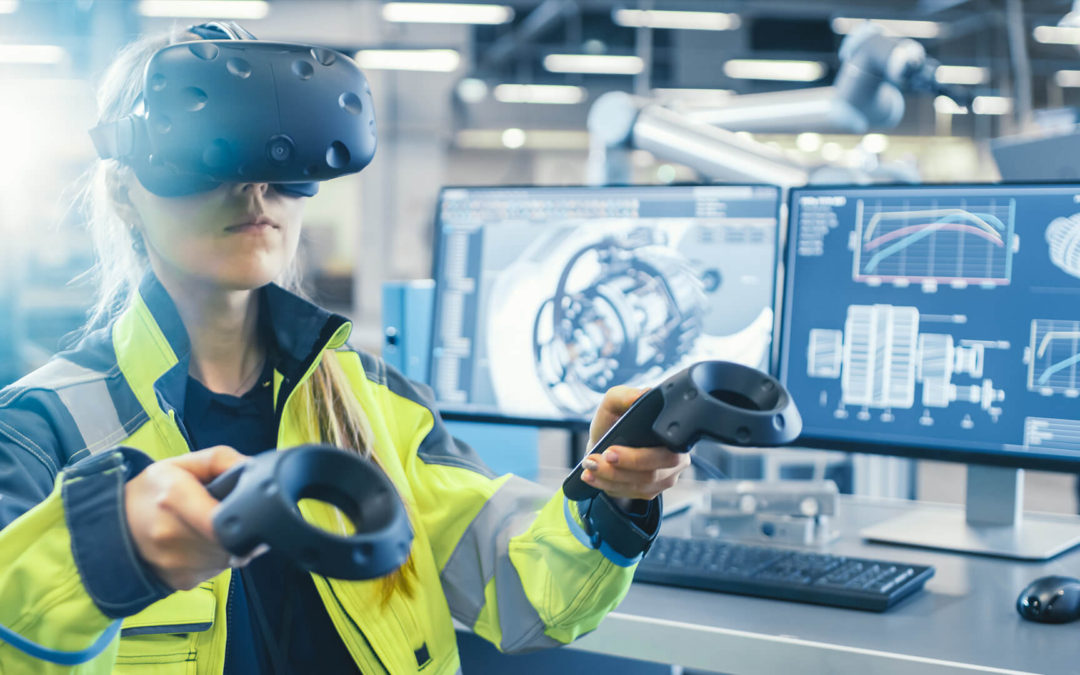
Virtual reality training poses an alternative and engaging method to develop new skills. But, if you are considering incorporating immersive technologies into your company’s training course, how can you verify that it provides a realistic, long-term answer to your skills requirements? There are many positives and advantages that point to a great benefit in immersive training as VR technology advances. Employees acquire skills faster, retain information better, and increase productivity and safety by allowing them to participate in hands-on, practical training in a safe virtual environment. Furthermore, there are financial advantages.
5 Benefits of using VR for training
Improved Learning and Performance
People learn from job-related experiences 70% of the time, compared to 20% from interactions with others and 10% through formal learning, according to the 70/20/10 learning and development principle.
Learning new abilities, retaining information, and altering behaviours is thus far more efficient and effective when learning through physical contribution. Virtual reality’s strength shown through in its ability to provide a realistic environment in which learners can gain hands-on experience with certain work-related skills. It also allows them to make mistakes, receive immediate feedback via performance-related metrics, and easily repeat activities multiple times to swiftly improve skill.
Do the Impossible
In several industries, such as oil and gas, aviation, manufacturing, and healthcare, on-the-job training is just not an option. Practical training is far too dangerous or operationally unfeasible due to hostile working situations, nonstop manufacturing lines, and learning life-threatening techniques. In many of these circumstances, however, being thoroughly trained is job-critical, as failing could have disastrous consequences. In certain cases, virtual reality can be used to recreate dangerous events in a safe but realistic learning environment so that highly skilled and risky jobs can be practiced by failing, learning from their mistakes, and repeating tasks, students can improve their skills quickly and effectively. Learners can also work with more confidence, reducing costly mistakes and making workplaces safer.
Speeding up the learning process
Time is money in business. Employees who are trained quickly and efficiently contribute to greater company productivity, and fully immersive training experiences allow learners to learn new skills rapidly and retain them. Virtual reality also eliminates distractions, allowing learners to learn smarter and faster. According to a Microsoft study, humans have a shorter attention span than goldfish, losing concentration after eight seconds – which is not conducive to successful learning. We can block out real-world distractions by wearing a VR headset, making us more likely to fully concentrate on the work at hand.
Reducing costs
The long-term financial benefits of using VR training are compelling. Both direct and indirect savings compensate for the initial hardware expenditure. Once your course has been designed, the costs of scaling it is cheap because it eliminates the need for repeat courses and potentially high trainer fees. Furthermore, tangible indirect cost savings can be realized by reducing downtime and eliminating the need to stop production, as well as enhancing productivity by having better trained and proficient staff.
Remote Training and accessibility
The beauty of virtual training is that you can do it from almost anywhere in the real world. The need to get personnel together in the same physical area at the same time is meaningless with VR. This makes training more accessible to many employees because it may take place anywhere. VR training has had a substantial impact on travel and hotel costs, as well as the additional downtime that must be accounted in for employees travelling to attend their training, for companies based across multiple locations or even countries, in addition to those with a rising number of remote workers. Reduced travel also has a significant positive influence on a company’s environmental footprint.
Conclusion
Virtual reality provides innovative, engaging, and fun ways to train in a safe, yet realistic setting. Individual learners benefit from it, as well as teams training together, which streamlines the process and contributes to a safer and more productive workplace.
by Jacob Billings | Jun 14, 2021 | Augmented Reality, Virtual Reality
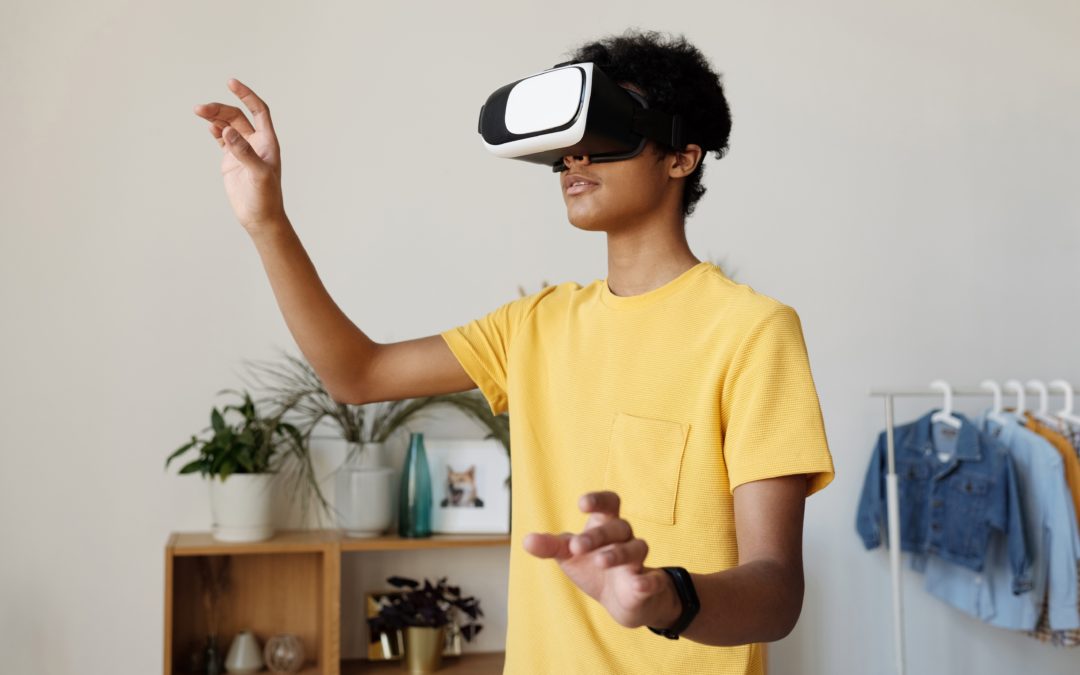
Since virtual and augmented reality are making their way into practically every aspect of our everyday lives, it is only natural that they would find their way into marketing, which is increasingly reliant on digital media. Digital marketing is defined as any type of marketing that uses electronic devices or digital content to deliver its message. Virtual and augmented reality are both examples of this. So, how can you make the most of this maybe still obscure technology? How can something that is still new and developing help your project or business? The explanation is simple: virtual reality’s unique traits — its uniqueness and lack of exploration – are precisely what makes it popular, trendy, and a breath of fresh air in the middle of all the tired marketing tactics we have seen before. Look at some basic, uncomplicated ways to use virtual and augmented reality into your marketing, and how this may help you increase your earnings in no time.
Virtual Tours
One of the most important ways this technology can benefit your business is by allowing your consumers to take a virtual tour of your choice. Do you have a store of your own? A restaurant? Or possibly a manufacturing facility where your product is made? Your consumers can put on a virtual reality headset and be instantly transported to another world, thanks to the miracles of virtual reality. They can either glance about the environment and experience the ambience, or they may be able to wander around and find new things, depending on the complexity of the program. Virtual tours are an excellent approach to introduce your places to customers who are unable to visit them in person.
New Launch Hype
Assume you have been developing a new product. It has been in the works for some time and is soon to be released to the public. Traditional advertising and marketing tactics are in place, but virtual reality may be worth considering. You can generate buzz and gain interest by having your customers look at the product itself before the launch, or even test it out. When it comes to launching a new product, you want as much attention as possible.
Product Testing
Whether your product is new or not, allowing customers or clients to try it out before purchasing is always a good idea. That way, they can get a sense of how the product functions and how it might appear in their home or on their person, and they will be more confident and happier with their purchase, boosting the chances of their return to you for more. It is a win-win situation for everyone. Virtual reality product testing can be used on a wide range of products, from garments and footwear to automobiles and other modes of transportation, as well as travel packages and real estate. Customers will appreciate the opportunity to try out the product.
Building Relationships
You are building your customer relationships by incorporating virtual reality into your marketing initiatives in all these ways. This is particularly true among the younger generation. New technologies spark people’s attention and provides an opportunity for them to learn more about your organization and/or projects. Through virtual reality, you can quickly explain how your business runs and how your staff contributes to a common goal, allowing your customers to feel more emotionally invested in the result.
by Ed Limon | Mar 4, 2021 | Linkedin Story
Building the future
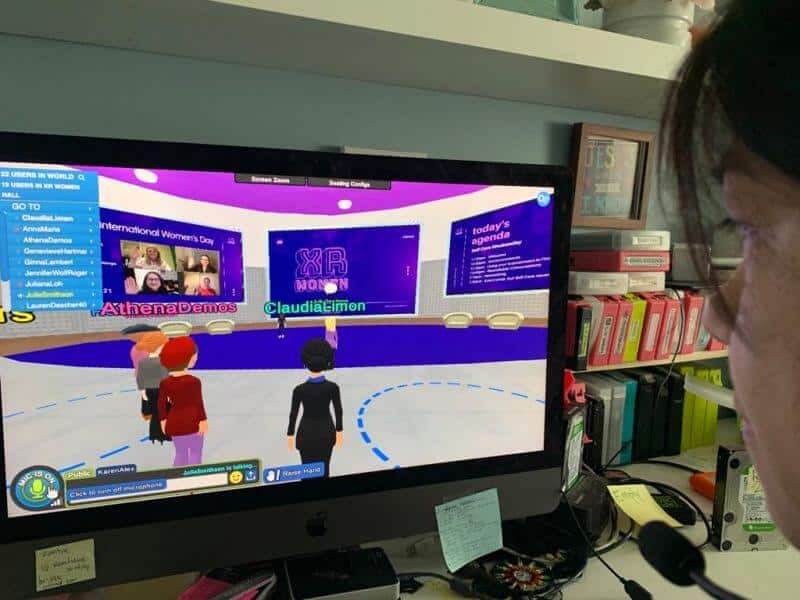
2026 has been a big year for XR, and we’re only halfway through.
Apple, Google, and Meta are all moving in the same direction at the same time. Enterprise investment is growing. Smart glasses are becoming something people actually want to wear. The industry is shifting in real time and it’s worth paying attention to.
We put together a quick breakdown of the biggest moments in XR right now. Tap to view post!