
Frequently Asked Questions in Media Production, Answered. (FAQs) – PART 2
Film production, video production, augmented reality (AR), and virtual reality (VR) are changing how businesses, brands, organizations, and audiences tell and experience stories. But with so many technologies, formats, cameras, software platforms, and production options available, knowing where to start can be difficult.
At Winged Whale Media, we believe great media begins with a clear understanding of the goal—not simply choosing the newest technology.
Whether you’re planning a corporate video, commercial, documentary, immersive experience, 360° video, AR campaign, VR experience, or virtual production project, this guide answers some of the most frequently asked questions.
16. How is VR filmmaking different from traditional filmmaking?
Traditional filmmaking gives the director significant control over what appears inside the frame.
VR and 360° production can change that relationship.
The audience may be able to look in multiple directions, meaning production teams need to think about:
• Camera placement
• Lighting
• Blocking
• Spatial audio
• Viewer attention
• Environment design
• Hidden crew and equipment
• Stitching
• Interactive elements
In immersive storytelling, the audience can have much greater freedom to explore the environment.
17. What is virtual production?
Virtual production combines physical filmmaking with digital environments and real-time technologies.
One example is LED-volume filmmaking, where actors perform in front of large LED displays showing digital environments.
Virtual production can allow filmmakers to see digital environments while filming rather than waiting until post-production to see the final composite.
18. Is virtual production the same as VR?
No.
They are related but serve different purposes.
Virtual reality is primarily an experience for the audience.
Virtual production is primarily a method of creating film, television, advertising, and other visual content.
Virtual production can use technologies associated with game engines, real-time rendering, tracking, LED displays, and digital environments.
19. What is immersive storytelling?
Immersive storytelling is storytelling designed to make the audience feel more directly present within an environment or narrative.
It can involve:
• VR
• AR
• 360° video
• Spatial audio
• Volumetric video
• Interactive environments
• Mixed reality
• Virtual production
Immersive media is increasingly expanding beyond traditional film formats into interactive and spatial experiences.
20. What is volumetric video?
Volumetric video captures people, objects, or environments as three-dimensional data.
Instead of simply recording a flat image, volumetric techniques can create a representation that can potentially be viewed from different perspectives.
This can be particularly interesting for immersive storytelling, virtual experiences, digital characters, education, and interactive applications.
Production Technology FAQs
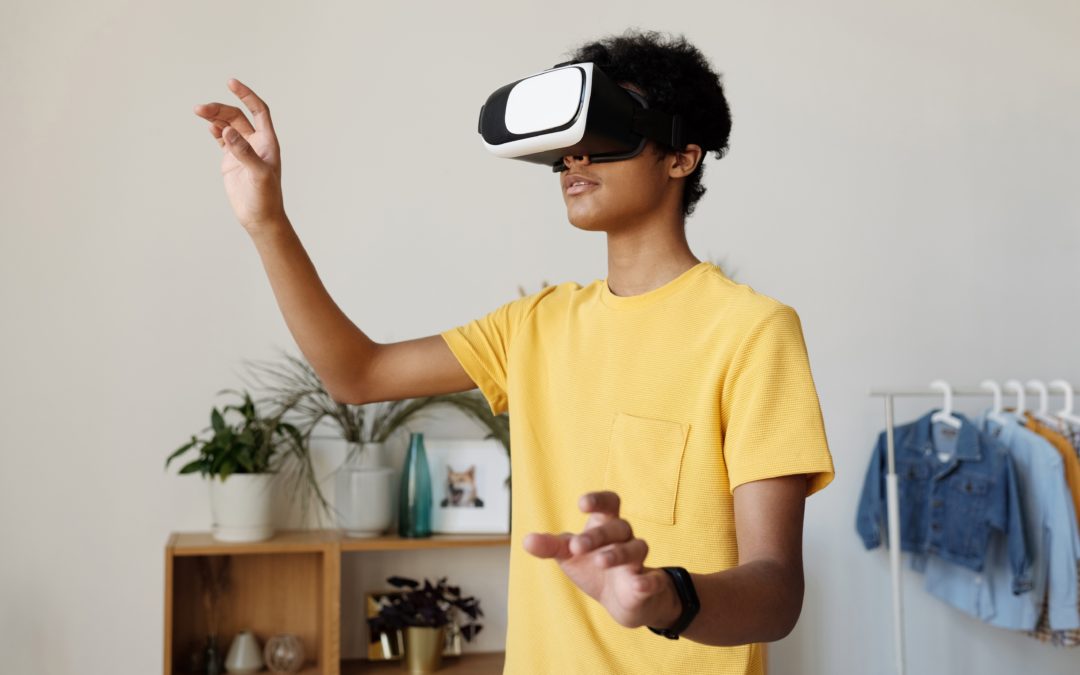
21. Can AR and VR be used for business?
Absolutely.
AR and VR can be used for more than entertainment.
Potential applications include:
• Employee training
• Product demonstrations
• Education
• Real estate
• Tourism
• Architecture
• Retail
• Marketing
• Events
• Museums
• Corporate communications
• Interactive experiences
The important question isn’t simply “Can we use VR?”
It is:
“Will an immersive experience help us achieve our objective better than traditional media?”
22. Is AR/VR expensive?
It can be—but the answer depends heavily on the type of experience.
A simple interactive AR experience can have very different requirements from a custom VR environment involving 3D modelling, animation, spatial audio, programming, and multiple devices.
Costs can depend on:
• Creative complexity
• 3D assets
• Software development
• Filming
• Animation
• Interaction design
• Hardware
• Testing
• Deployment
• Content updates
The smartest approach is to establish the desired user experience first and then determine the appropriate technology.
23. Can AI be used in film and media production?
Yes.
AI is increasingly being explored across multiple stages of production, including development, pre-production, visualization, editing, post-production, sound, and localization.
Potential applications include:
• Concept development
• Script assistance
• Storyboarding
• Production planning
• Transcription
• Video organization
• Editing assistance
• Visual effects workflows
• Captioning
• Translation
• Content personalization
However, AI should be treated as a production tool rather than a replacement for creative direction, storytelling, human judgment, and responsible production practices.
24. Can traditional film and AR/VR be combined?
Yes—and this is one of the most exciting possibilities.
A project could combine:
Traditional video + AR + 3D animation + 360° content + interactive experiences
For example, a company could create a traditional promotional film and then provide viewers with an AR experience that lets them interact with a 3D product.
This creates multiple ways for audiences to engage with the same story.
25. What is spatial storytelling?
Spatial storytelling considers not only what the audience sees, but also where the audience is within the story.
This becomes especially important in VR, 360° video, spatial computing, and immersive environments.
Instead of asking only:
“What should the camera show?”
Creators may also need to ask:
“Where should the audience be?”
“What should they notice?”
“What happens around them?”
“How should sound guide their attention?”
This represents a major shift from traditional frame-based storytelling toward audience-centered experiences.
Choosing the Right Production Approach
26. Should my business create a traditional video, AR experience, or VR experience?
Start with the business objective, not the technology.
Ask:
1. Who is the audience?
2. What do we want them to understand?
3. What do we want them to feel?
4. What action should they take?
5. Where will they experience the content?
6. Do they have access to the required technology?
If a traditional video communicates the message effectively, you may not need VR.
If immersion, interaction, or spatial experience provides a meaningful advantage, AR or VR may be worth exploring.
27. What should I prepare before contacting a production company?
You don’t need to have everything figured out.
It helps to know:
• Your objective
• Your target audience
• The type of content you want
• Your preferred deadline
• Where the content will be used
• Any existing brand guidelines
• Your approximate budget, if known
• Examples of content you like
A professional production team can help turn an initial idea into a production plan.
28. Can a production company help develop the idea?
Yes.
Many projects begin with nothing more than an idea or business objective.
The creative development process can help determine:
Concept → Story → Format → Production → Distribution
This is especially valuable for AR, VR, and immersive projects because the technology should serve the experience rather than becoming the experience itself.
29. What is the most important part of a media production?
The story and the audience experience.
Technology continues to evolve rapidly. Cameras become more capable, editing tools become more sophisticated, and immersive technologies continue to expand.
But audiences still respond to stories that communicate something meaningful.
Great production combines:
Storytelling + Creativity + Technology + Strategy
30. What does the future of film, AR and VR look like?
The boundaries between traditional film, virtual production, interactive media, AR, VR, and spatial computing are becoming increasingly interconnected.
Virtual production is becoming a more established part of modern production workflows, while immersive formats are creating new approaches to storytelling and audience engagement.
The future isn’t necessarily about replacing traditional filmmaking.
It is about giving creators more ways to tell stories and audiences more ways to experience them.
Why Choose Winged Whale Media?
At Winged Whale Media, we believe media production should begin with your story, audience, and objective.
Whether you’re looking for traditional video production, cinematic content, immersive experiences, AR, VR, 360° media, or emerging production technologies, the right solution starts with understanding what you are trying to achieve.
Have an idea for a film, video, AR or VR experience?
Let’s turn the idea into an experience your audience can see, hear, explore, and remember.
Winged Whale Media
Film Production | Video Production | AR | VR | Immersive Media | Creative Technology
Your story. Your audience. A bigger world.